
Views: 0 Author: Site Editor Publish Time: 2026-06-15 Origin: Site


Dunkang Pueraria Root and Selenium-rich Cordyceps liver support tablets
Hangover recovery is a sensitive supplement topic because consumers want practical support, but responsible content must avoid encouraging excessive drinking. The best way to discuss a hangover recovery supplement is to focus on liver support, alcohol metabolism, hydration, oxidative stress, and next-day comfort. A product should be presented as a wellness tool for occasional social drinking, not permission to ignore personal limits.
The Dunkang Pueraria Root and Selenium-rich Cordyceps Tablets give a clear product reference for this category. The formula direction features pueraria root, selenium-rich cordyceps, corn oligopeptide powder, and other support ingredients. Instead of reading like a generic liver supplement, the product can be explained through the biological stages of alcohol processing.
Alcohol does not disappear once the evening ends. The body must break it down, process byproducts, manage fluid balance, and restore normal energy. The liver plays the central role in this process. It converts alcohol into acetaldehyde and then into less harmful substances, while other systems deal with dehydration, disrupted sleep, stomach irritation, and oxidative stress.
Many hangover symptoms come from several factors at once. Dehydration may create thirst and headache. Poor sleep may create fatigue and irritability. Acetaldehyde and oxidative stress may contribute to discomfort. Congeners in certain drinks can worsen the experience. Because the process is multifactorial, a serious supplement should use a multi-ingredient formula rather than relying on one trendy extract.
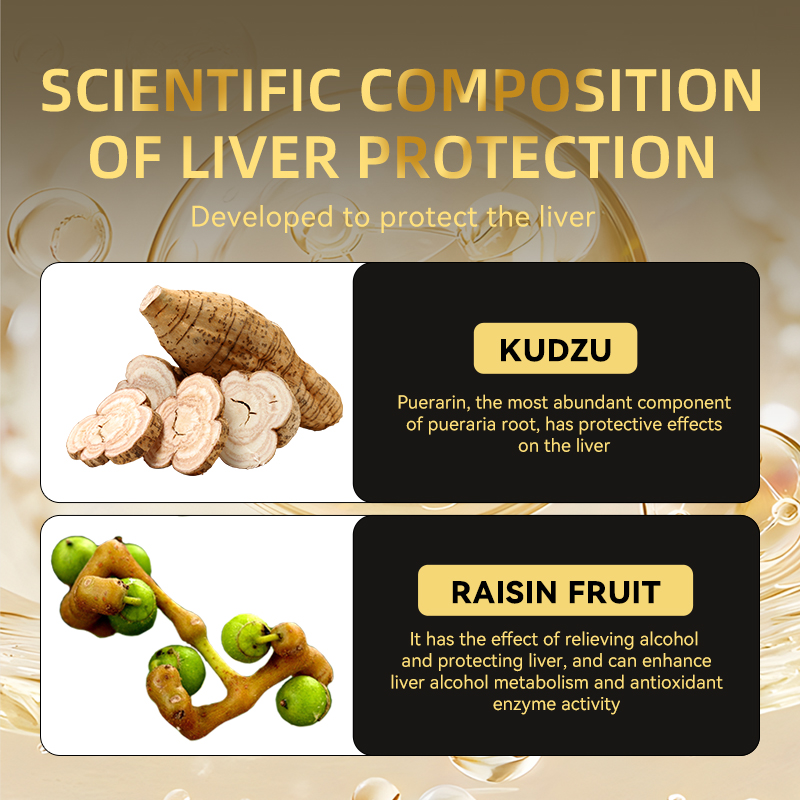
Pueraria root has a long history in traditional wellness applications related to alcohol and comfort after drinking. In modern supplement positioning, it is often used in formulas that support alcohol metabolism and liver wellness. It gives the product a botanical foundation and a familiar story for consumers who prefer plant-based support.
In the Dunkang formula, pueraria is paired with selenium-rich cordyceps and corn oligopeptide powder. This creates a broader mechanism: botanical support, antioxidant-related support, and peptide-based nutrition. The product page describes the formula as a five-layer anti-alcohol approach and refers to patent ingredients such as selenium-rich cordyceps powder and corn oligopeptide powder.
Selenium is an essential trace element involved in antioxidant systems. When the body processes alcohol, oxidative pressure can rise. A supplement that includes selenium-rich cordyceps can therefore be positioned around antioxidant defense and liver-support nutrition. The wording should remain cautious: the product supports normal wellness processes, rather than reversing the effects of heavy drinking.
Cordyceps also has a strong reputation in functional health products. Combining it with selenium creates a more distinctive story than a simple herbal tablet. It helps the formula feel modern while still drawing from familiar natural ingredients.
Corn oligopeptide is another ingredient that appears in liver and alcohol-support discussions. Peptide ingredients can be used to support metabolic processes and recovery nutrition. In a hangover recovery supplement, corn oligopeptide helps broaden the product narrative beyond herbs alone. It signals a formula designed with multiple pathways in mind.
When explaining corn oligopeptide, the language should remain straightforward. It is not a magic shield. It is part of a formula that supports the body's ability to process alcohol-related burden. That tone makes the article sound more credible and reduces the risk of overclaiming.
Stage | What the body is handling | Supplement-support focus |
|---|---|---|
Before drinking | Preparing the digestive and metabolic environment | Botanical and nutrient support, clear serving routine, hydration awareness |
During social drinking | Alcohol processing, fluid loss, sleep disruption risk | Moderation, water intake, food intake, steady pacing |
After drinking | Acetaldehyde clearance, oxidative pressure, tiredness | Liver-support nutrients, antioxidant-related support, recovery habits |
Next morning | Fatigue, dryness, low appetite, poor sleep quality | Hydration, gentle food, rest, and supplement routines that follow label directions |
Pueraria root: A botanical ingredient often used in alcohol-related wellness formulas.
Selenium-rich cordyceps: A functional ingredient direction connected with antioxidant and liver-support positioning.
Corn oligopeptide: A peptide ingredient used to broaden metabolic support language.
Myricaria glabra and related botanicals: Helpful for creating a more complete plant-based formula story.
Hydration and electrolytes: Not always part of the tablet itself, but essential to real recovery habits.
A hangover recovery supplement needs to be portable, easy to carry, and simple to take according to label directions. Tablets are well suited for this because they are compact and stable. They also fit consumers who want a product they can keep in a bag, desk, or travel kit. The Tablet category on Dunkang's site includes targeted supplements such as liver support and joint support, making this dosage format a natural match.
Compared with a drink format, tablets place less emphasis on flavor and more emphasis on convenience. For this category, that is useful. The consumer may not want a large bottle or powder sachet during a social setting. A tablet product can keep the routine discreet and simple.
Hangover articles can easily become irresponsible if they imply that supplements remove the risks of alcohol. A stronger article makes moderation clear. A supplement does not make unsafe drinking safe. It does not replace sleep, hydration, food, or personal limits. It also does not replace medical care for alcohol poisoning or persistent symptoms.
Responsible content can still be persuasive. It can explain how liver-support ingredients work, why antioxidant nutrition matters, and how a thoughtful routine may help occasional drinkers feel more prepared. This balance makes the article suitable for a serious health supplement brand.
Developing a hangover recovery tablet involves ingredient identity, dosage logic, tablet hardness, disintegration, coating choice, odor control, and packaging. Some botanical ingredients can have strong taste or smell. A well-made tablet needs to manage those sensory details while remaining easy to take.
Dunkang's Manufacturing Capabilities page describes production lines across tablets, capsules, liquids, powders, and other formats. For a hangover tablet, those capabilities help support consistent tablet quality. The Quality page also strengthens the article's trust layer by connecting the product concept with process discipline.
Read the label first: Follow the suggested serving and safety directions.
Drink water: Hydration remains one of the simplest recovery habits.
Eat before drinking: Food can slow alcohol absorption and reduce stomach stress.
Do not mix with unsafe habits: Avoid driving or operating equipment after drinking.
Know personal limits: Supplements support wellness routines but cannot remove the risks of excess alcohol.
The product is most relevant for adults who occasionally drink in social, travel, or business settings and want a planned support routine. It may also interest wellness brands building a liver-support or nightlife recovery line. The key is to present the product as part of responsible self-care, not as a cure-all.
For brand positioning, the strongest content angle is “natural liver-support ingredients for occasional drinking recovery.” This is more trustworthy than exaggerated claims about instant relief. It also fits the product's ingredient story more closely.
A hangover recovery product is most credible when paired with practical habits. Eating before drinking, pacing alcohol intake, alternating with water, avoiding late-night overeating, and planning sleep are all part of real recovery. A supplement can support this routine, but it should not be the only plan. Brands that acknowledge this reality sound more responsible and more trustworthy.
This approach also helps consumers use the product wisely. Someone who expects a tablet to erase every poor decision will likely be disappointed. Someone who uses it as one part of a moderate drinking routine will understand the product better. That difference in expectation is important for long-term brand trust.
A basic liver product may focus on general detox language. A hangover recovery supplement should be more specific. It can discuss alcohol metabolism, acetaldehyde, oxidative stress, fluid balance, sleep disruption, and next-morning comfort. It can also explain why the formula is designed for social-drinking scenarios rather than general daily liver maintenance alone.
The Dunkang product has a distinctive ingredient story because it combines pueraria root with selenium-rich cordyceps and corn oligopeptide powder. This gives the article several angles: traditional botanical support, trace-element antioxidant support, and peptide nutrition. Using those angles makes the content less generic and more closely tied to the actual product.
Responsible content should remind readers that serious alcohol-related symptoms require urgent help. Confusion, repeated vomiting, slow breathing, loss of consciousness, seizures, very low body temperature, or inability to wake should not be treated as a normal hangover. These signs may indicate alcohol poisoning or another medical emergency.
Adding safety information is especially important for this category. It helps separate a legitimate wellness supplement from careless drinking culture. A brand can still promote recovery support while making it clear that consumer safety comes first.
Hangover recovery tablets are often used around travel, dinners, celebrations, or business entertainment. Packaging should therefore be portable, easy to identify, and protected from moisture. A compact bottle or blister pack can support different use occasions. Label directions should be visible and simple, especially because the product may be used outside the home.
For brand planning, the product can sit inside a broader liver wellness line, a men's health range, a travel wellness kit, or a functional tablet category. The strongest positioning is not loud or reckless. It is practical, natural, and prepared.
A hangover recovery supplement should not promise that someone can drink without consequences. It should not claim to eliminate intoxication, make driving safe, or protect against alcohol-related harm. These statements are unsafe and unsuitable for a responsible health brand. The correct message is that selected nutrients and botanicals may support the body's natural recovery processes when used as directed.
This careful tone can still support strong marketing. In fact, it may improve trust because consumers know the brand is not exaggerating. Practical language about liver support, hydration, rest, and moderation creates a more durable product image than extreme claims.
A hangover recovery tablet can connect with liver wellness, men's health, travel support, or social occasion products. It may also sit beside probiotics, multivitamins, or antioxidant formulas in a broader supplement portfolio. The product should keep its own identity, but it can still contribute to a larger wellness system. This allows brands to build repeat engagement without making every product sound the same.
After-use guidance should be simple and practical. Drink water, rest, eat light food when comfortable, and avoid more alcohol when the body is already under stress. This type of guidance strengthens the product message because it shows respect for real recovery rather than relying only on supplement claims.
A natural hangover recovery supplement should be explained through liver support, antioxidant systems, alcohol metabolism, and responsible habits. The Dunkang Pueraria Root and Selenium-rich Cordyceps Tablets stand out because they combine pueraria root, selenium-rich cordyceps, corn oligopeptide powder, and related functional ingredients in a tablet format designed for practical use.
The most effective message is balanced: support the body, respect personal limits, and build better recovery habits. When written this way, a hangover supplement article becomes useful, credible, and clearly different from generic liver-care content.


